Salome is remembered from Matthew 14:6–10 as the daughter of Herodias who danced before Herod Antipas and, following her mother’s request, asked for John the Baptist to be executed. The Gospels do not name her, but the Jewish historian Josephus identifies the daughter of Herodias as Salome. She was the daughter of Herodias and Herod Philip I. Later, she married Aristobulus of Chalcis, a Herodian ruler connected with Armenia Minor. A rare coin of Aristobulus and Queen Salome shows Salome’s portrait and names her as queen.
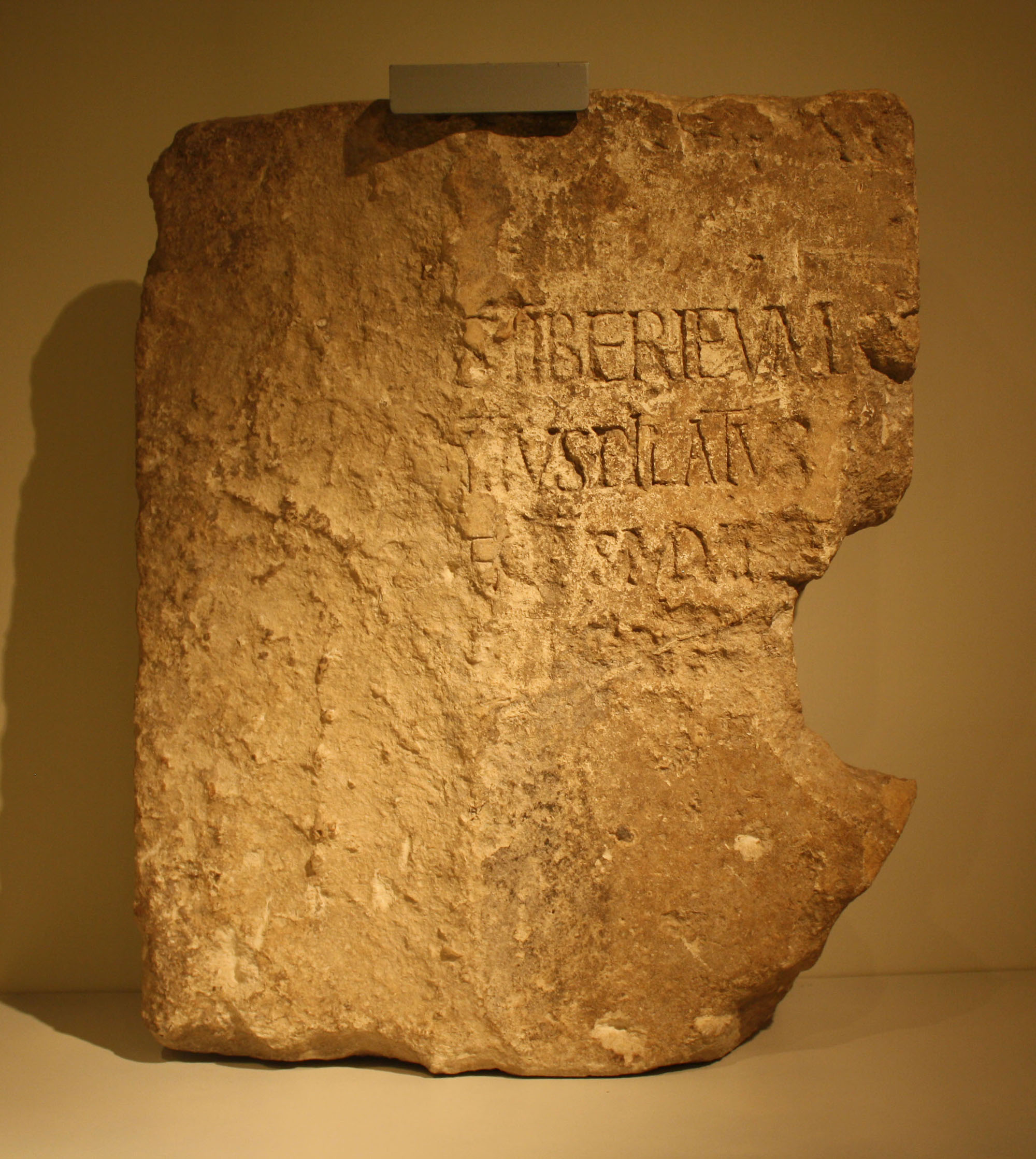
Pontius Pilate is one of the best archaeologically confirmed figures from the Gospels. The famous Pilate Stone, discovered at Caesarea Maritima, contains his name in Latin: Pontius Pilatus. It also gives his official title as Prefect of Judea — Praefectus Iudaeae.
This is important because Tacitus later called Pilate a procurator, but the inscription uses the earlier and more precise title prefect. The Gospels use the broader Greek term often translated as governor. So the stone inscription and the Gospel language agree that Pilate was the Roman governing authority in Judea.
Another important object is a copper-alloy ring from Herodium, the palace-fortress built by Herod the Great. After modern cleaning and analysis, scholars noticed a Greek inscription reading “of Pilatus” around a vessel image. The ring is simple, and the name could refer to someone connected with Pilate’s administration. Still, it is important because it shows the name Pilatus/Pilate in an archaeological context from the same Roman-Judean world.
Coins are especially powerful because they give names and official titles. Herod the Great is known from coins and inscriptions as king, matching the Gospel phrase “King Herod” in Matthew 2:1.
The coins of Herod Antipas are also important. The Gospel calls him Herod the tetrarch and his coins carry the Greek title “Herod the Tetrarch”, exactly matching the political title used in the New Testament world.
The same is true for Philip the Tetrarch, mentioned in Luke 3:1 as ruler of Iturea and Trachonitis. Coins of Philip bear the inscription “Philip the Tetrarch.” This confirms that the Gospel uses the correct historical title for this ruler.