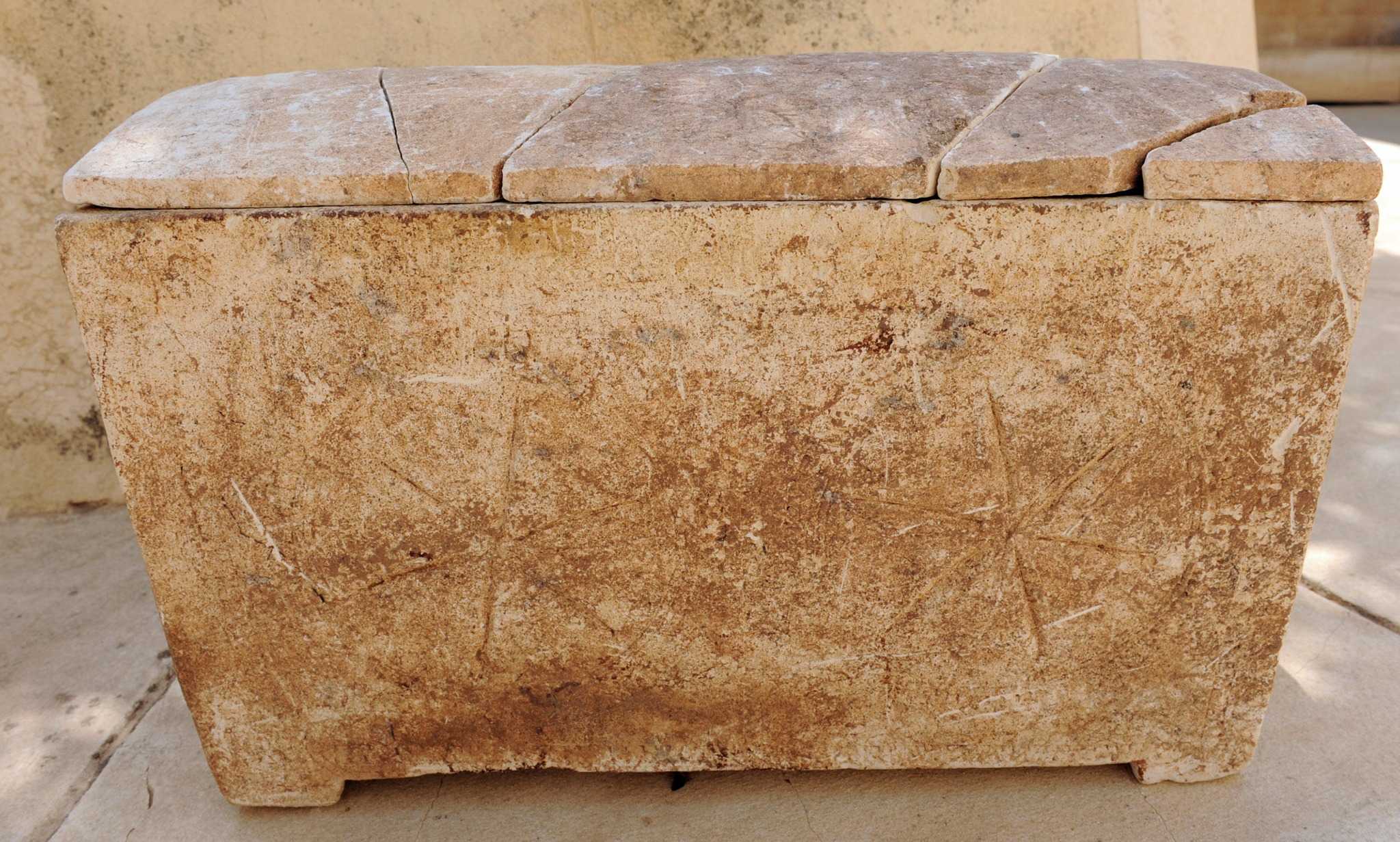
In 2011, an important limestone ossuary came to scholarly attention after being recovered from looters. It was said to come from a burial cave in the Valley of Elah. What made it extraordinary was its long Aramaic inscription: “Miriam daughter of Yeshua son of Caiaphas, priests of Maʿaziah from Beth Imri.”
This short sentence opens a window into one of the most famous priestly families of the New Testament period. Miriam appears to have been the granddaughter of Caiaphas, the high priest connected with the trial of Jesus in the Gospels. The inscription also connects the family with the priestly course of Maʿaziah, one of the divisions of priests serving in the Jerusalem Temple.
Another famous ossuary, discovered in Jerusalem in 1990, bears the inscription “Joseph son of Caiaphas.” It is richly decorated and is often connected with the high priest known from the New Testament and from the historian Josephus.
Together, these discoveries do not prove every detail of the Gospel story, but they strongly confirm that Caiaphas was a real historical figure from a priestly family of Jerusalem. They also show that the Gospel writers were speaking about people rooted in the real world of first-century Judea.
The Gospel of John tells us that Caiaphas was the son-in-law of Annas. Archaeology cannot prove that family relationship directly, but the ossuaries give powerful historical support to the world described in the Gospels: real names, real families, real priests, and real places.