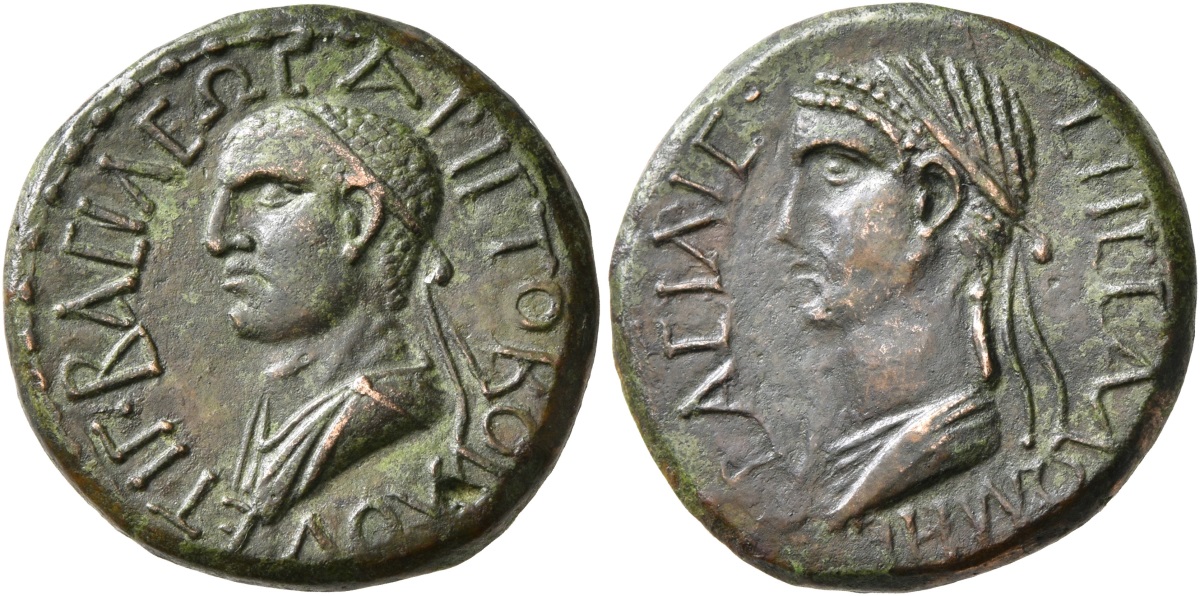
A coin is small, but it can carry a great amount of historical information: the name of a ruler, his title, the language of administration, religious symbols, dates, and political power.
In my book, The Archaeology of the Gospels, I present seven ancient coins connected with people and places known from the Gospel world. These include coins connected with Salome the daughter of Herodias (Photo) , Herod the Great, Herod Philip, Herod Antipas, and Pontius Pilate. Coins of Pilate, for example, were Roman coins used in Judea, but their inscriptions were written in Greek. This shows the mixed political and cultural world in which the Gospel events took place.
Coins are especially valuable because they are official objects. They were not written centuries later. They were produced during the lifetime of rulers and officials. When a coin carries the name or title of a ruler, it becomes a direct witness from that time. Coins of Herod Philip are important because he was one of the Herodian rulers mentioned in the Gospel setting, and his coinage reflects the world of Roman influence in the land of Israel.
This is why coins can help readers understand the New Testament more clearly. The same names, titles, and political world that appear in the Gospels also appear on ancient coins. Numismatics does not replace the Gospel text, but it gives archaeological support to its historical background.
In this way, a small bronze coin becomes more than money. It becomes a witness: a piece of metal that still speaks about kings, governors, cities, and the real world in which Jesus lived.